AI in Accounting, What Small Businesses Need to Know in 2026
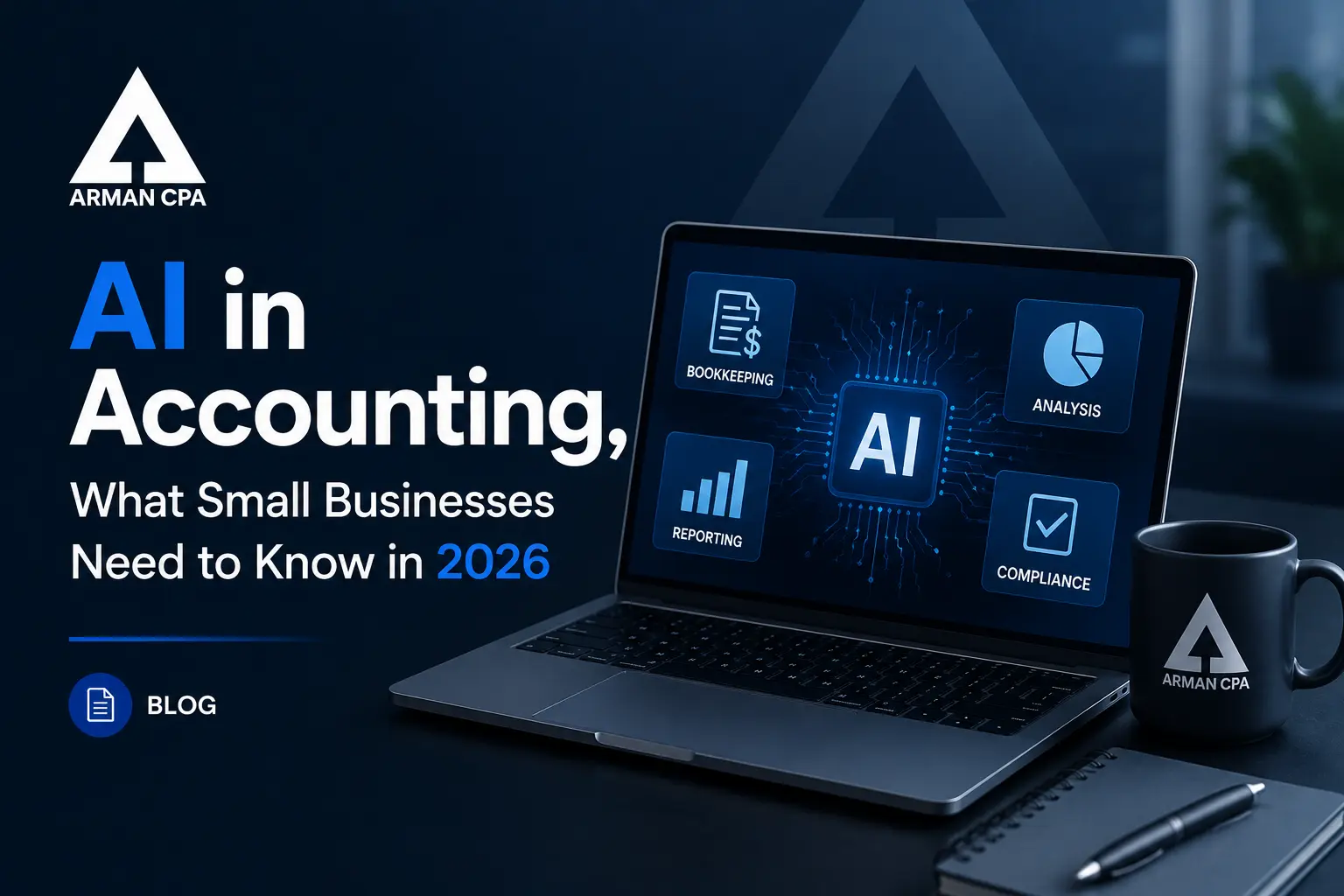
Artificial intelligence has moved from a buzzword to a daily tool in accounting offices across the country. From automated data entry to predictive cash flow reports, AI in accounting is changing how business owners track money, file taxes, and plan for growth. This guide breaks down what AI can actually do for your books, where it falls short, and how to use it wisely alongside a licensed CPA.
What AI in Accounting Really Means
AI in accounting refers to software that uses machine learning and pattern recognition to handle tasks that once required manual review. Instead of a bookkeeper manually categorizing every transaction, AI tools can scan bank feeds, learn your spending patterns, and sort expenses automatically. The technology also powers smart alerts, flags unusual transactions, and drafts financial reports in a fraction of the time it used to take.
Where AI Adds the Most Value
Small businesses see the biggest wins from AI in three areas, data entry, expense categorization, and anomaly detection. Instead of spending hours reconciling bank statements, AI powered platforms like QuickBooks and Xero can match transactions automatically, freeing up time for higher value work. AI also helps catch duplicate charges, missed invoices, and cash flow gaps before they become real problems.
Where AI Still Falls Short
AI is excellent at pattern recognition, but it does not understand context the way an experienced CPA does. It cannot interpret a new tax law, negotiate with the IRS, or tell you whether a business structure change makes sense for your specific goals. AI also struggles with edge cases, unusual transactions, and judgment calls that require years of hands on experience. This is why the firms getting the best results treat AI as a tool for efficiency, not a replacement for professional advice.
How to Use AI in Accounting Without Losing Control
The smartest approach combines AI powered efficiency with CPA level oversight. Start by automating the repetitive tasks, data entry, categorization, and basic reporting. Then use the time you save to focus on strategy, tax planning, and growth decisions with your accountant. Always have a licensed professional review AI generated reports before you rely on them for major financial decisions.
What This Means for Your Business
AI in accounting is not going away, and businesses that learn to use it well will have a real advantage over those that ignore it. The goal is not to replace your CPA with software, it is to give your CPA better tools so you get faster answers and more accurate numbers. If you are evaluating AI tools for your business, talk to an accountant who understands both the technology and your specific financial picture. At Arman CPA, we combine licensed CPA expertise with custom AI advisory built around your real financials, so you get the speed of automation without losing the judgment that protects your business.